The Michigan State University community had the opportunity this week to hear from and engage with Pulitzer Prize-winning Mexican author Cristina Rivera Garza during a campus visit centered on her acclaimed book, Liliana’s Invincible Summer.
Organized by Alejandra Márquez Guajardo, Assistant Professor of Spanish in MSU’s Department of Romance and Classical Studies, and Laurie Medina, Director of MSU’s Center for Latin American and Caribbean Studies, the visit brought together students, faculty, and community members for an evening of reading, conversation, and reflection on the power of storytelling as a space for remembrance, imagination, and collective care. The visit also included a student-centered session that offered a more intimate conversation about the themes and creative process behind Liliana’s Invincible Summer.
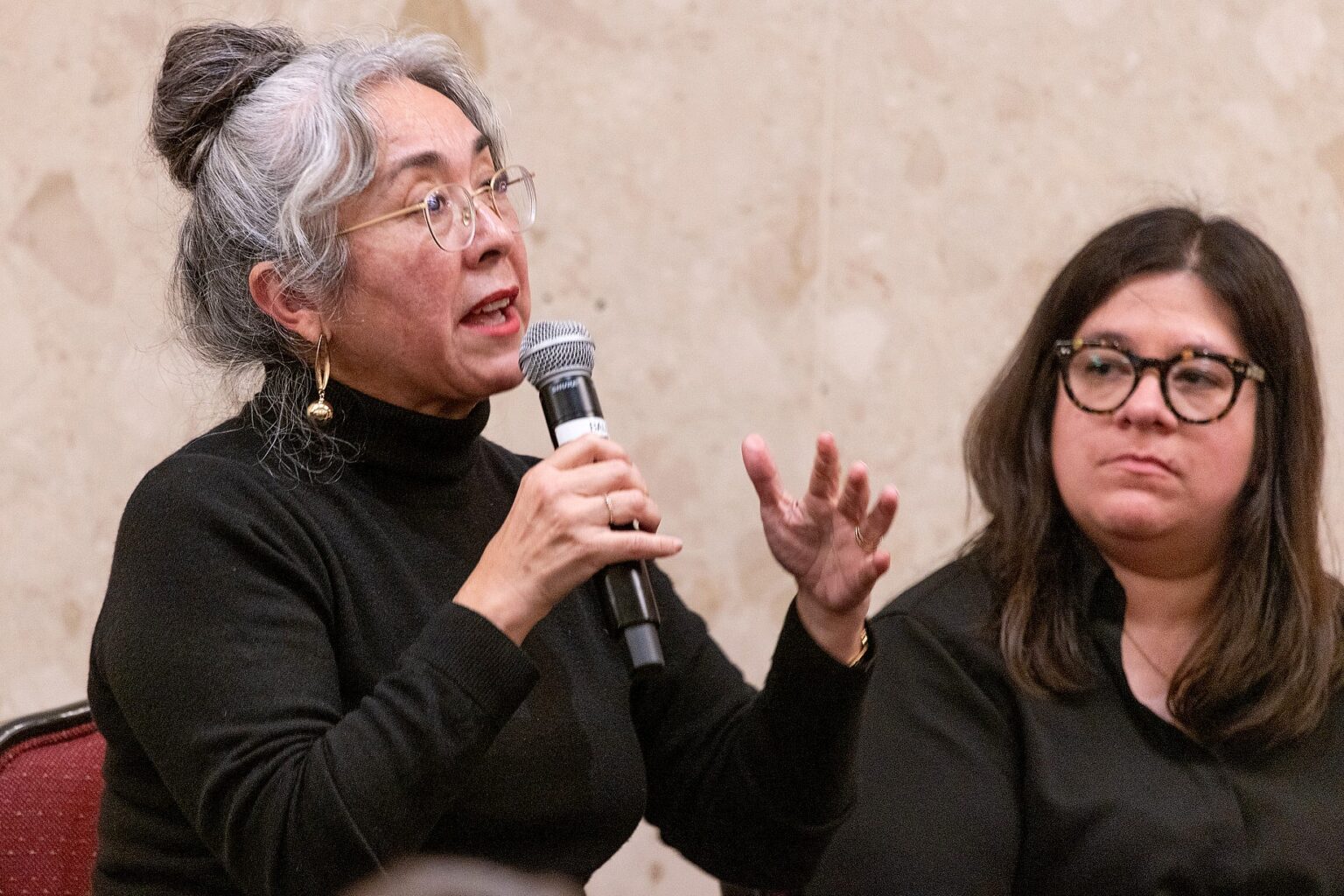
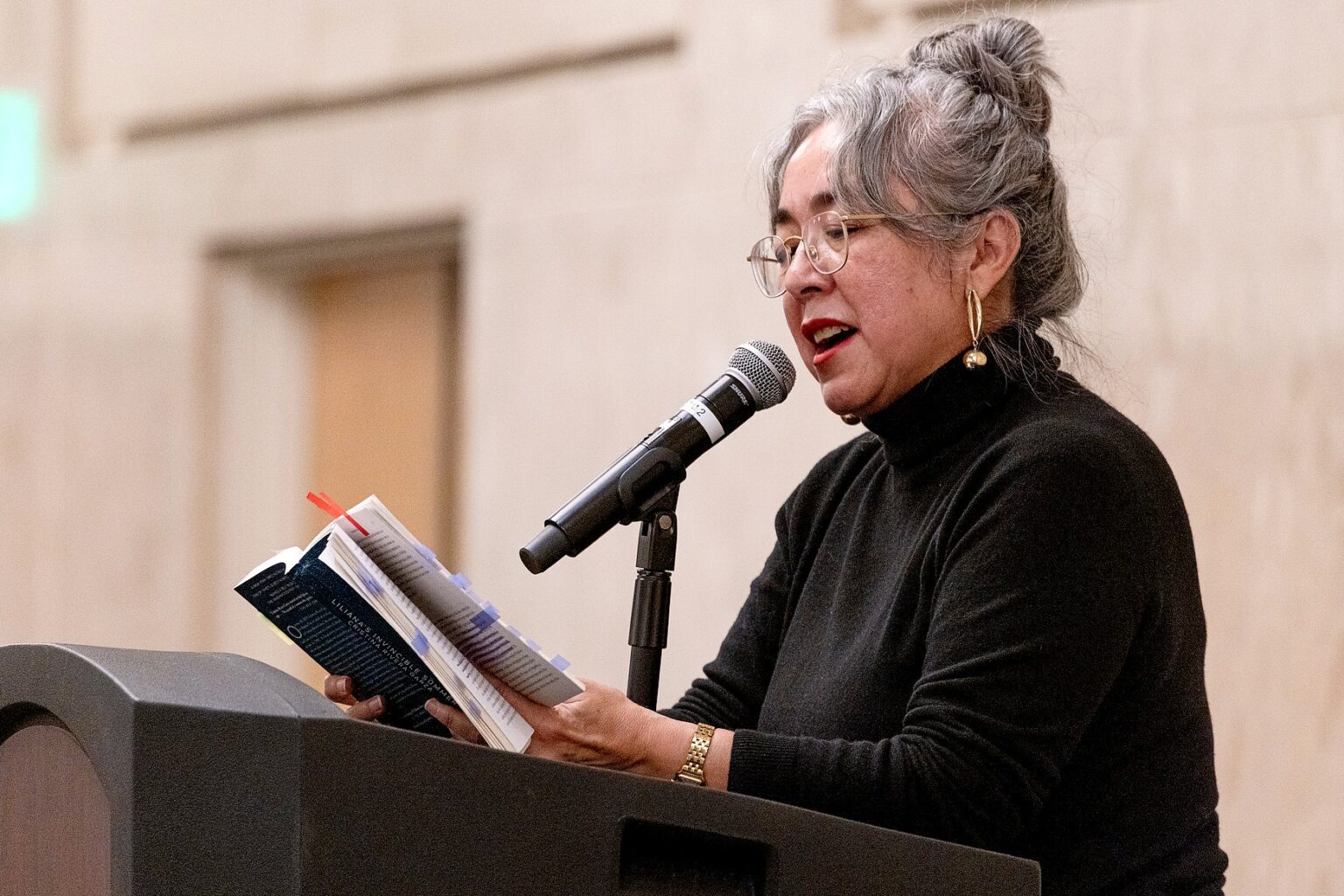

“Cristina’s visit was a success,” Márquez Guajardo said. “I was happy to hear very positive comments and gratitude from our MSU community and beyond. The opportunity to have such an influential writer on campus showed how literary works can bring together people across disciplines and from very different backgrounds. The generosity she showed by taking the time to talk to people one-on-one and share her experiences was reciprocated by the enthusiasm that people showed for her.”
During the evening event on March 9, titled Confronting Gender Violence Through Literature, which was open to the public, Rivera Garza began with a reading from Liliana’s Invincible Summer, the book that earned her a Pulitzer Prize for Memoir or Autobiography in 2024. Blending journalism, memoir, and poetic prose, the work reconstructs the life of her younger sister, Liliana, a bold and curious young woman pursuing independence and passions in a world that often sought to limit her.
“The opportunity to have such an influential writer on campus showed how literary works can bring together people across disciplines and from very different backgrounds.”
Dr. Alejandra Márquez Guajardo
On July 16, 1990, Liliana was murdered by her abusive ex-boyfriend, a crime that exposes gender violence and impunity in Mexico. Through letters, diaries, official records, and memories, Rivera Garza worked to recover Liliana’s voice while imagining her life beyond the tragedy and the contributions she might have made. Through this work, Rivera Garza transforms private grief into a powerful act of memory, testimony, and resistance, ensuring her sister’s memory will continue to live and inspire.

“Liliana had been devoid of voice. If her own voice had been what was literally killed. I wanted to fill the book as a space for that voice and for that experience,” Rivera Garza said. “I was trying to emphasize the reasons behind the murder, but I was even more interested in celebrating and honoring Liliana’s life…This is a book in which we see Liliana’s own perspective on life, her own conviction about her autonomy, her views about love and about women’s ways in society — all those are very important topics in the book. Of course, I am inviting readers to partake of the sorrow or the pain but also at the same time to be aware of how complex, how multilayered, and how happy, too, was Lilliana’s stay with us here on earth.”
“Liliana had been devoid of voice. If her own voice had been what was literally killed. I wanted to fill the book as a space for that voice and for that experience.”
Dr. Cristina Rivera Garza
Following the reading, Rivera Garza joined a panel of MSU faculty members — Alejandra Márquez Guajardo, Rocio Quispe Agnoli, and Leonora Souza Paula — for a conversation about writing, history, and the responsibilities authors face when working with real-life stories. The discussion continued with an audience Q&A. A reception afterward gave attendees the opportunity to continue the dialogue and meet the author, who also signed copies of her book.
The following day, Rivera Garza participated in a student-centered conversation that offered a more intimate look at the themes and creative process behind Liliana’s Invincible Summer. During this session, students asked questions and reflected on their own relationships to storytelling, exploring how writing can serve as a both a creative and social engagement.


Rivera Garza discussed the challenges and responsibilities involved in reconstructing her sister’s life through writing, drawing on archival materials, personal memories, and creative reflection to build a narrative that honors Liliana while challenging the silences often present in historical records.

“I knew Liliana as my younger sister, but I was not her best friend. I was not the guy in love with her. I was not a professor or a cousin. I needed to learn that. And that’s the reason why research is so relevant. Not to capture her, but to look at her in its most complex,” Rivera Garza said. “The book gifted me many Liliana’s. That was so impactful for me as a sister but also as a writer.”
In the weeks leading up to Rivera Garza’s visit, MSU faculty and staff had the opportunity to engage with her work through a virtual campus book club centered on Liliana’s Invincible Summer. The three-session discussion series invited participants to read approximately 100 pages per session and created space for conversation and reflection across disciplines in preparation for the author’s visit, which was supported by the Center for Latin American and Caribbean Studies, the Department of Romance and Classical Studies, the Chicano/Latino Studies Program, and through a Creating Inclusive Excellence Grant.
A Distinguished Literary Voice
A historian by training, Rivera Garza is widely recognized as one of the most influential voices in contemporary Latin American literature. Her work moves across genres, combining narrative, poetry, short fiction, and scholarly inquiry while raising questions about gender, sexuality, and the ways stories shape collective memory.
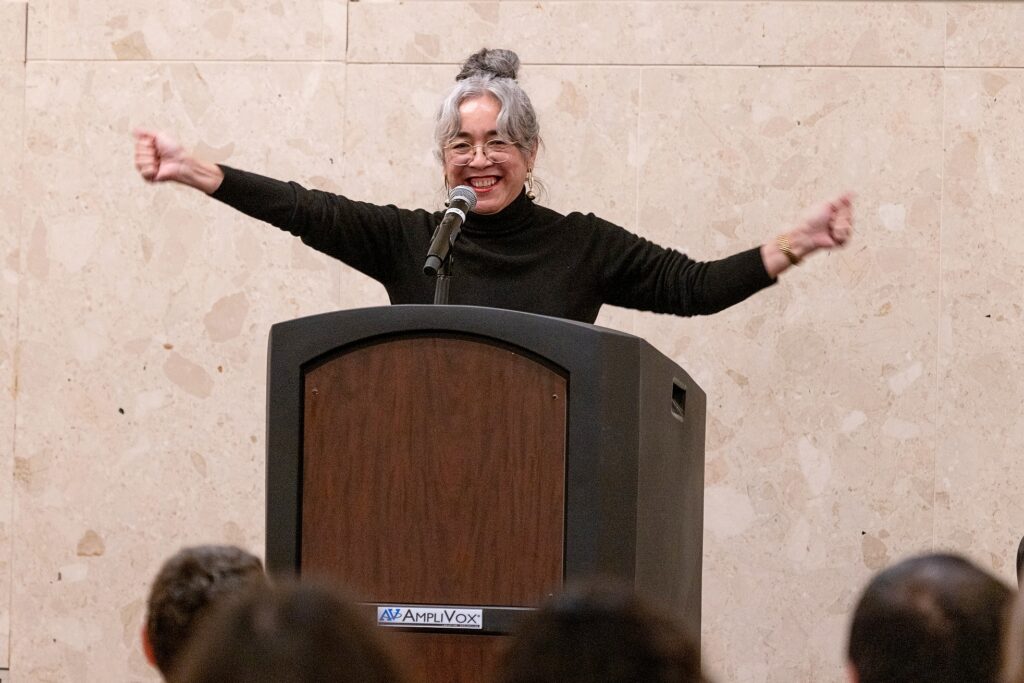

In addition to the Pulitzer Prize, Rivera Garza received a MacArthur Fellowship in 2020. She is the M.D. Anderson Distinguished Professor in Hispanic Studies at the University of Houston, where she founded and continues to direct the first Ph.D. program in Creative Writing in Spanish in the United States.
For many attendees, the opportunity to hear from Rivera Garza — and to speak with her about literature, memory, and justice — made the visit especially meaningful.
“When we read, we acquire new eyes and look at the world with that compassion, with that complexity. I truly believe that we need that right now so urgently. That is the reason why I believe literature is still necessary in whatever form it comes.”
Dr. Cristina Rivera Garza
Through readings, conversations, and shared reflection, Rivera Garza’s visit highlighted how literature can bring communities together and open new pathways for understanding, empathy, and connection.
“That’s the best gift of literature is that it thrives in complexity,” Rivera Garza said. “That is the reason I love writing. It’s not going to let us go easily. It’s not going to let us dwell on our prejudices, and it is going to require and demand from us that complexity and courage too. In literature, the reading is not only happening when we open the book, and it doesn’t end when we close the book. When we read, we acquire new eyes and look at the world with that compassion, with that complexity. I truly believe that we need that right now so urgently. That is the reason why I believe literature is still necessary in whatever form it comes.”
By Kim Popiolek


