A new academic year brings new beginnings and Fall 2026 marks an especially significant moment for Michigan State University’s College of Arts and Letters. Students are returning to a college that has grown in scope, with new academic programs, newly housed majors, and expanded opportunities. The year also brings a new slate of performances, exhibitions, and other creative and academic experiences.

Among the most significant changes is the integration of the College of Arts and Letters and the Residential College in the Arts and Humanities, which is now the School of Residential Community-Engaged Arts and Humanities (RCAH). Two new Philosophy majors also are launching this fall. Meanwhile, the Spanish Education and French Education majors are now housed in the college, and graduate program admissions have reopened for the 2027-28 academic year.
The College of Arts and Letters also is welcoming 20 new faculty and staff members, celebrating 29 faculty promotions, and beginning the year with new leadership in the Department of Religious Studies and in Digital Humanities.
“This is a year filled with new possibilities, strengthened by the addition of the RCAH community, new academic programs, new colleagues, and new opportunities to learn, create, and collaborate. I look forward to all we will accomplish together.”
Thomas Stubblefield, Dean of the College of Arts and Letters
Together, these developments make Fall 2026 not simply the start of another academic year, but the beginning of a new chapter for the College of Arts and Letters.
“As we begin a new academic year, I am delighted to welcome our students, faculty, and staff — both those returning and those joining us for the first time,” said Thomas Stubblefield, Dean of the College of Arts and Letters. “This is a year filled with new possibilities, strengthened by the addition of the RCAH community, new academic programs, new colleagues, and new opportunities to learn, create, and collaborate. I look forward to all we will accomplish together.”
A More Connected College
On July 1, 2026, the College of Arts and Letters and Residential College in the Arts and Humanities officially integrated, creating new opportunities for students, faculty, and the campus community while strengthening the arts and humanities at MSU.
The integration brings together the broad academic programs and creative resources of the College of Arts and Letters with RCAH’s distinctive community-engaged residential education model.

As part of the integration, RCAH became the School of Residential Community-Engaged Arts and Humanities while retaining its familiar acronym, mission, Arts and Humanities major, and residential experience in Snyder-Phillips Hall.
“The College of Arts and Letters and RCAH share a deep commitment to creativity, critical inquiry, community engagement, and the study of what it means to be human,” Stubblefield said. “This integration allows us to build on that shared mission while strengthening MSU’s role as a place where the arts and humanities help students understand culture, history, language, ethics, creativity, and community in ways that prepare them to lead meaningful lives and make a difference in the world.”
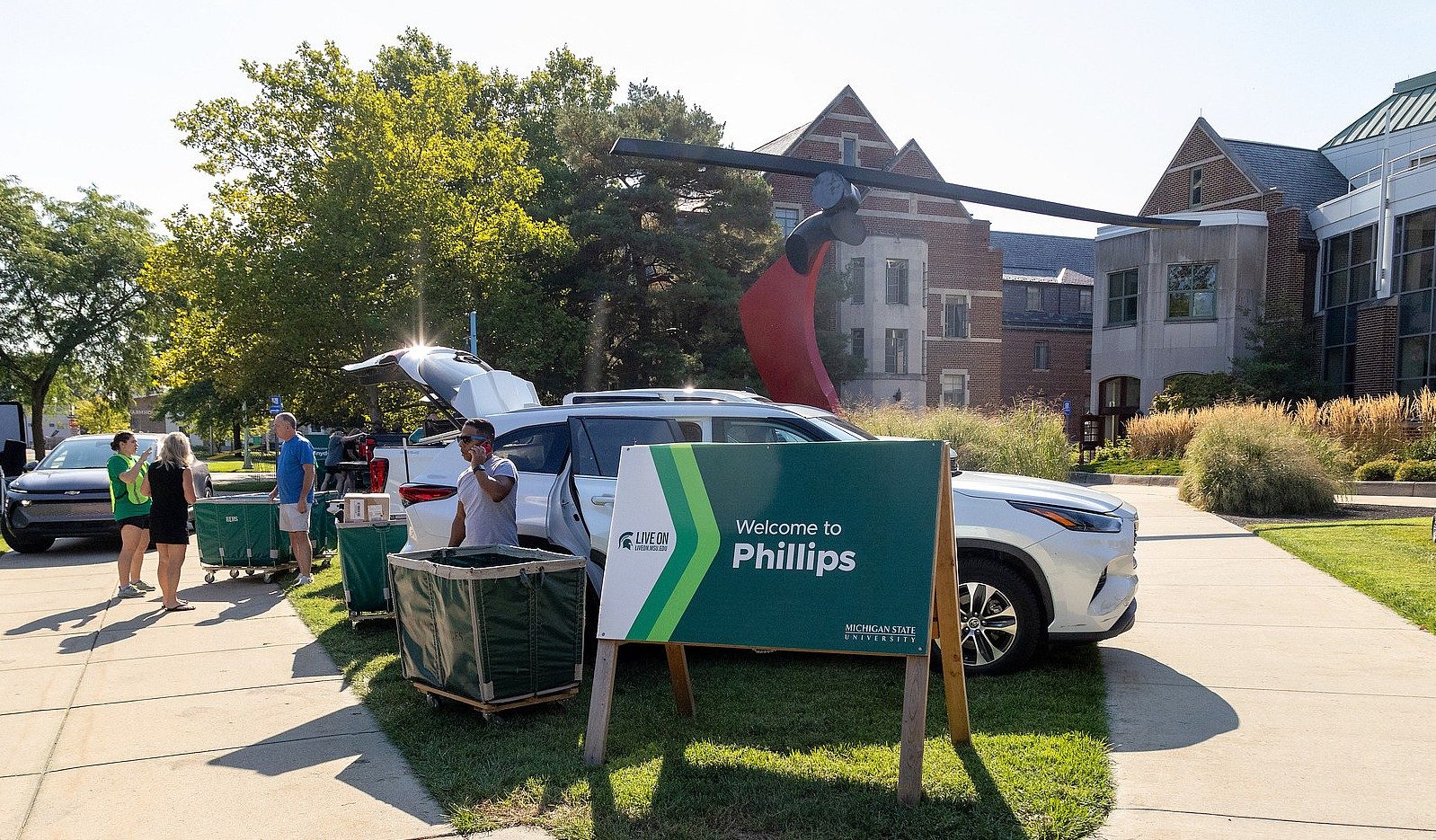
RCAH students now have greater access to the College of Arts and Letters’ wide range of courses, programming, creative spaces, research opportunities, and other resources. College of Arts and Letters students will benefit from increased access to RCAH’s immersive, community-engaged educational model and new opportunities for collaboration that connect artistic and humanistic work to public life.
The integration also makes RCAH’s residential living-learning experience available to students pursuing any major in the College of Arts and Letters, creating new possibilities for interdisciplinary learning, creative projects, research, and public-facing work.
New Academic Opportunities
Students have more academic programs to consider this fall, including two new majors offered by the Department of Philosophy.

The new Bachelor of Arts in Philosophy and Law combines the study of law, justice, and contemporary ethical issues with the reasoning, writing, and analytical skills central to philosophy. It provides a foundation for law school and careers in public policy, government, nonprofits, administration, higher education, and other fields.

The new Bachelor of Arts in Philosophy and the Sciences brings scientific inquiry and philosophical thinking together. Designed to complement study in STEM fields, the program challenges students to consider how scientific knowledge is produced and the ethical and societal questions surrounding scientific discovery.
Both majors can be completed in as little as two years, making them accessible to students interested in adding a second area of study.
The Spanish Education and French Education majors also are now housed in the Department of Romance and Classical Studies in the College of Arts and Letters. This transition places the existing teacher-preparation programs within the college that houses MSU’s language departments.
The College of Arts and Letters also reopened admissions to its graduate programs for the 2027-28 academic year following a planned one-year pause focused on the long-term strength and sustainability of graduate education.
New Colleagues, New Leadership, and Advancement
The College of Arts and Letters begins the academic year by welcoming 20 new faculty and staff members whose expertise spans academic disciplines and student-support areas.

“Our newest colleagues bring experiences, ideas, and expertise that will add to the intellectual and creative life of our college and campus,” Stubblefield said. “Their arrival marks not only the beginning of a new academic year, but new possibilities for collaboration, discovery, and growth across the college.”
The new faculty and staff members will be recognized during the College of Arts and Letters’ 2026 Faculty and Staff Welcome Reception on Monday, Sept. 28, at the Kellogg Hotel and Conference Center.
“Our newest colleagues bring experiences, ideas, and expertise that will add to the intellectual and creative life of our college and campus.”
Thomas Stubblefield, Dean of the College of Arts and Letters
The Department of Religious Studies begins the academic year under new leadership, with Morgan Shipley beginning his appointment as Chairperson on July 1, 2026. An Associate Professor of Religious Studies and the Foglio Endowed Chair of Spirituality, Shipley joined the department in 2013. His vision emphasizes collaboration, curricular growth, student success, and enhancing the collective strengths of faculty, staff, and students.
Digital Humanities at MSU (DH@MSU), which is both a program and a center, also begins the year under new leadership. Kristen Mapes began her term as Director of Digital Humanities on July 1, 2026, after serving as Interim Director during the previous year. Mapes brings extensive experience in teaching, advising, program development, collaborative projects, and advocacy for the interdisciplinary academic and research program.


The college also is celebrating 29 faculty members who earned promotions this year in recognition of their accomplishments in teaching, research, creative activity, leadership, and service. This year’s group is the first to include faculty from RCAH.
A New Season of Creativity
The year ahead offers many opportunities for the campus and surrounding communities to experience the arts at MSU.
The Department of Theatre’s 2026-27 Season, organized around the theme “Becoming,” features nine productions exploring identity, transformation, resilience, and the choices that shape who people become.

Highlights include “Discovery: A New Musical,” which gives students the opportunity to work alongside Broadway-caliber professionals through a collaboration with Wharton Center, and the world premiere of “Night, by Ghostlight,” an original play written specifically for MSU’s MFA in Acting cohort as the culmination of a three-year collaborative project.
The Department of Art, Art History, and Design (AAHD) is planning exhibitions throughout the academic year at the MSU Union Art Gallery, (SCENE) Metrospace, and Kresge Art Center Galleries. And RCAH is doing the same for the LookOut Gallery. These exhibitions will feature work by students, faculty, alumni, visiting artists, and other contemporary artists.
AAHD will launch its 2026-27 Stanley and Selma Hollander Visiting Artist, Designer, and Scholar Lecture Series on Sept. 29, 2026, with American Artist, whose work examines the history of technology, race, and knowledge production. Additional speakers will bring a range of contemporary creative practices and perspectives to MSU throughout the year. All lectures are free and open to the public.
Looking Ahead
With new academic pathways, new colleagues and leaders, expanded connections, and a full calendar of creative and scholarly activity, the 2026-27 academic year promises to be one of growth and possibility for the College of Arts and Letters.
Together, these developments will create more opportunities for students, faculty, and staff to learn, create, collaborate, and strengthen the role of the arts and humanities at MSU and beyond.


