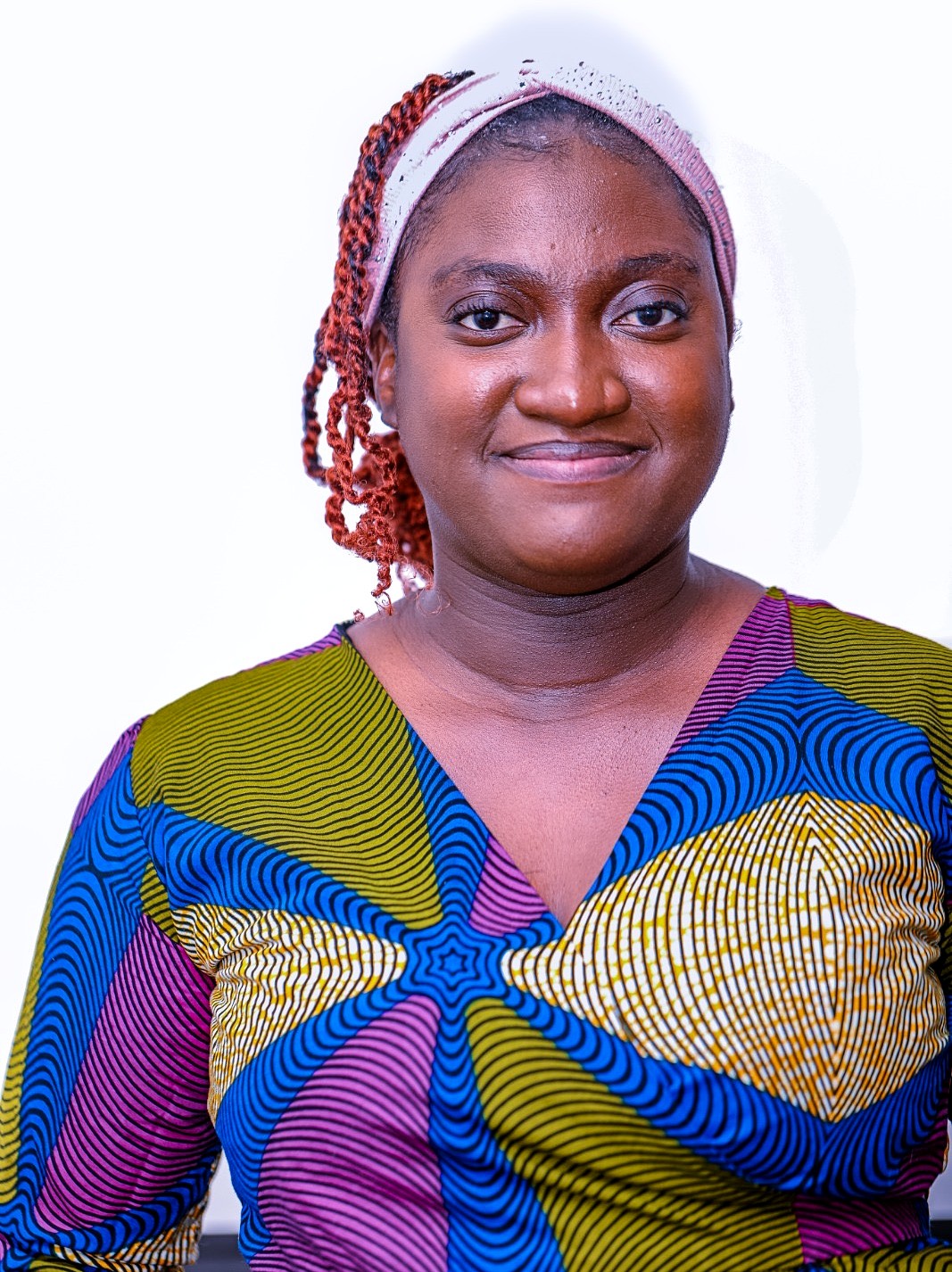
Temilade Adegoke, a doctoral student in German Studies and Graduate Teaching Assistant, came to Michigan State University in Fall 2022 to pursue an M.A. in German through the Department of Linguistics, Languages, and Cultures. She previously earned a B.A. in German Studies from the University of Ibadan, Nigeria.
Her master’s thesis, Confronting Memory: Multi-directionality of 20th-Century Genocides in Namibia and Germany, examined Germany’s colonial violence in German Southwest Africa – present day Namibia. The project explored the politics of memory and contemporary discourses surrounding what historians identify as the “first genocide of the 20th century.”
After earning her M.A. in German from MSU in Summer 2024, Adegoke was named a Global Studies Graduate Scholar by MSU’s Global Studies in the Arts and Humanities Program and began her doctoral program in Fall 2024. Her current research engages questions of Heimat, Zugehörigkeit, and belonging within migration discourse, with a particular focus on the African diaspora in Germany. She is especially interested in how colonial histories are contested, remembered, and renegotiated in contemporary migration debates.
Adegoke was named the Educator of the Month for January 2026 by MSU’s Graduate School and shared her experiences both as a doctoral student and an instructor and what lessons others can learn from them in the following Q&A originally published by the Graduate School.
What does it mean to be an educator at a university?
Being a university educator goes beyond simple instruction; it is about facilitating the transition from student to professional. Unlike the regular elementary and high school contexts, university students who are educators are young adults refining their specific academic and professional identities.
I approach the educator role by constantly asking myself, “What helped me as an undergraduate? What strategies did I find least helpful?” This reflection, combined with my perspective as an international student, enables me to bridge cultural gaps and create a more inclusive, globally aware learning environment.
My instructional roles have mostly been in the language classroom; thus, my teaching practices are generally tailored to language and communicative-specific principles for learning and teaching. Adopting a collaborative pedagogical approach is vital for me as a university educator.
I seek collaboration both within and outside the classroom, from constant brainstorming with my colleagues and professors to dialogues with my students. My curious ears are always ready to listen to new ideas on making life in the university better.
What are some challenges you have experienced and how have you grown from them?
Having obtained my bachelor’s degree in Nigeria, I found that the expectations here, from both professors and students, were slightly different. The student-instructor relationship was also slightly more hierarchical, and I could not always approach my instructors with every challenge I had. That was not the case here, as my professors were generally more approachable and even encouraged me to always ask questions.
It was initially a challenge to adjust to these differences. Balancing my background with the reality of the U.S. classroom was a challenge. However, building relationships with my professors helped immensely. They were willing to guide my growth, which contributed to a seamless transition into the academic culture at MSU.
Balancing the roles of both a student and an educator is teaching me essential time-management and prioritization skills, as the intensity of these dual responsibilities requires careful attention to my commitments. The demands of these roles are significant and often require meticulous planning and organization to fulfill my commitments effectively. This balancing act has been instrumental in honing my ability to allocate time wisely and maintain focus on my academic and teaching duties.
As an educator, I encounter a diverse cohort of students each semester, each with unique learning needs and expectations. This necessitated a refinement of teaching methods and, in most cases, an adjustment to approaches to meet the learning needs of the students. Adapting my teaching methods to meet these diverse requirements has made me more resilient and responsive in the classroom, ensuring that I can effectively support all my students and create a good learning environment.
What value do you see in teaching professional development?
I see professional development as a space for constant self-improvement and checks and balances. It prevents teaching from becoming stagnant. Having the opportunity to work with mentors like Dr. Stefanie Baier as part of my GREAT Fellowship was instrumental.
It allowed me to move beyond relying solely on intuition and instead apply evidence-based strategies to my teaching. These workshops also provide a community where we can share struggles and solutions, ensuring that we are not just teaching content, but actively improving how we transfer knowledge.
What is one piece of advice you would give other graduate educators?
Embrace the cycle of learning, unlearning, and relearning. The most effective educators are those who remain students at heart. You must be willing to unlearn outdated methods and learn from your students’ diverse experiences.
Additionally, lean on your network. Mentors and peers are great sources of information for navigating this journey. Talking to other graduate students, including those who have already graduated, has been a massive help to me. You do not have to figure it all out by yourself; learn from other people’s experiences.