The impact of Michigan State University’s College of Arts and Letters extends far beyond campus. Across Michigan, students, faculty, and alumni are putting the arts and humanities to work through education, language access, accessibility, public engagement, and creative partnerships that preserve cultural heritage, expand opportunity, strengthen communities, and prepare the next generation of leaders.
“The arts, culture, and humanities enrich our lives by helping us better understand ourselves and others, appreciate different perspectives, and find meaning and common ground in an increasingly divided world,” said Thomas Stubblefield, Dean of the College of Arts and Letters. “They foster a stronger sense of belonging, strengthen our communities, and help ensure that Michigan remains a place where people want to build their futures.”


The College of Arts and Letters’ work demonstrates the essential role the arts and humanities play at a public, land-grant university — not simply generating knowledge, but putting knowledge, creativity, and expertise to work in service to people and communities throughout Michigan.
The importance of this work is recognized statewide with Arts, Culture, and Humanities Day in Michigan, observed annually on Aug. 4. Gov. Gretchen Whitmer proclaimed this statewide observance in 2025 to recognize and promote the vital role the arts, culture, and humanities play in enriching the state and shaping Michigan’s future.
“The arts, culture, and humanities…foster a stronger sense of belonging, strengthen our communities, and help ensure that Michigan remains a place where people want to build their futures.”
Thomas Stubblefield, Dean of the College of Arts and Letters
At MSU, that role is both cultural and practical. Arts and Humanities education helps prepare graduates with the communication, creativity, cultural understanding, ethical reasoning, and problem-solving skills Michigan needs across sectors. Through community partnerships, research, creative activity, and student learning, the college is helping strengthen the talent, trust, and sense of place that contribute to Michigan’s long-term vitality.
Across the College of Arts and Letters, that impact takes many forms — from strengthening education and expanding language access to preserving cultural heritage, fostering connections, creating more inclusive communities, and making the arts more accessible to people across Michigan.
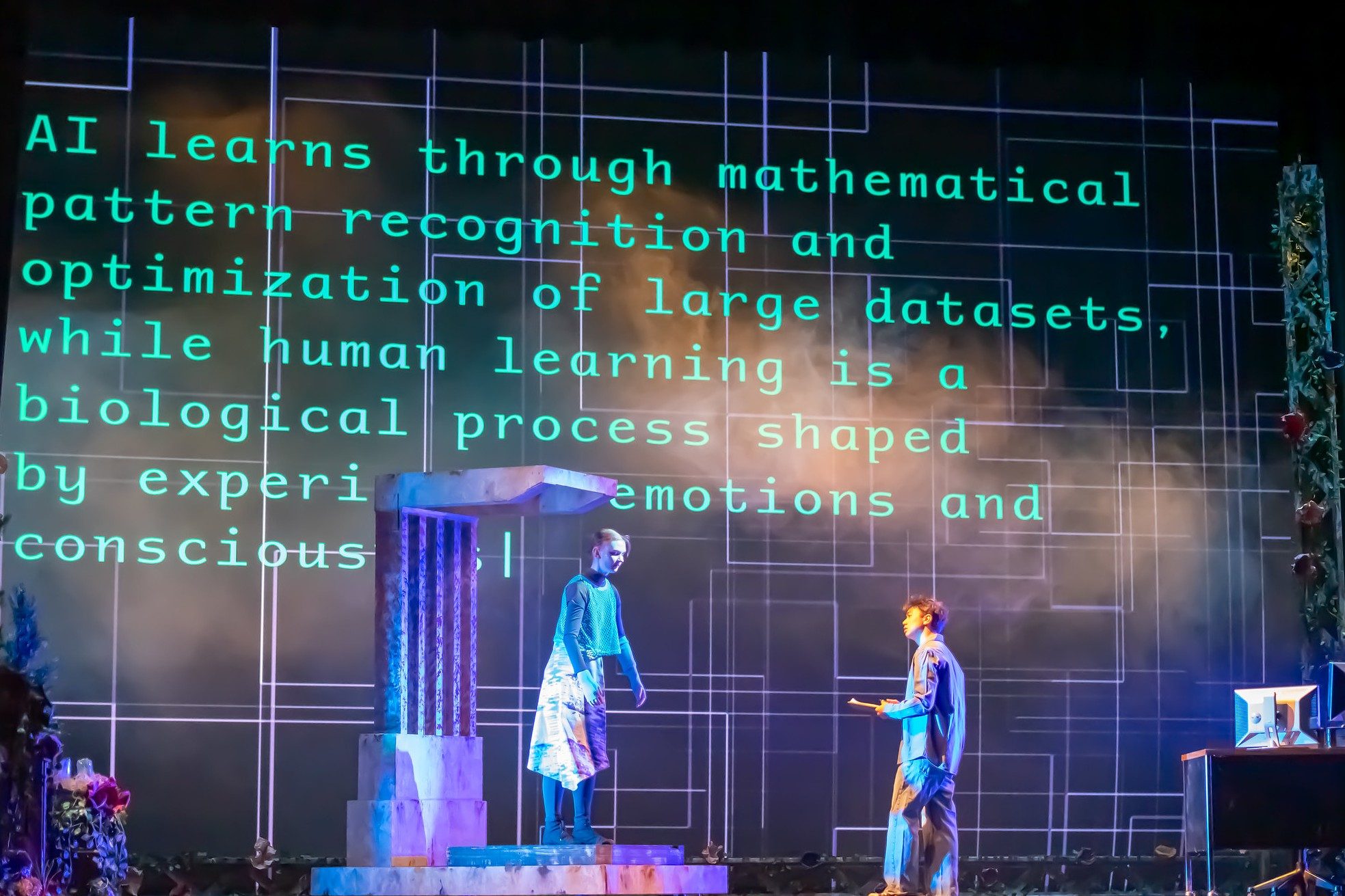
Arts, Culture, and Humanities Day offers an opportunity to look at what that impact means in practice and how the College of Arts and Letters is fulfilling its land-grant mission through teaching, research, creative activity, and community engagement.
The following examples illustrate that impact — from supporting teachers and expanding language access to designing more inclusive communities and making the arts a public resource.
Read More:
Supporting Michigan Teachers and Strengthening Education
The College of Arts and Letters is helping strengthen education across Michigan by supporting the teachers who inspire the next generation of learners.
Through the MSU Holocaust and Genocide Curriculum Teacher Fellowship, offered by the College of Arts and Letters, grades 8–12 English and social studies educators from across the state work with Michigan State University faculty and scholars to deepen their understanding of the Holocaust, genocide, and human rights while developing thoughtful, age-appropriate ways to bring these complex subjects into their classrooms.

Led by Mary Juzwik, Professor of English Education with a joint appointment in the Department of Teacher Education in the College of Education and Department of English in the College of Arts and Letters; Laura Yares, Associate Professor of Judaism in the Department of Religious Studies; and Deborah Margolis, MSU Librarian for Jewish Studies, Muslim Studies, Middle East Studies, and Religious Studies, the fellowship equips teachers with new knowledge, instructional resources, and a statewide network of colleagues committed to fostering critical thinking, historical understanding, and civic engagement.
“We’ve already seen hundreds of educators impacted,” Juzwik said. “When you invest in one teacher, you’re impacting generations of students.”

The College of Arts and Letters’ commitment to strengthening education and supporting educators extends across disciplines. As one example, Trixie Smith, Professor in the Department of Writing, Rhetoric, and Cultures and Director of the Red Cedar Writing Project, was honored with the Michigan Council of Teachers of English’s Charles Carpenter Fries Award, recognizing decades of leadership in preparing English language arts teachers and advancing literacy education throughout the state. Through her teaching, scholarship, and mentorship, Smith has helped shape generations of educators who now serve students in classrooms across Michigan.
Whether providing professional development for experienced teachers or preparing future educators, the College of Arts and Letters is helping ensure that Michigan classrooms are places where students are encouraged to think critically and develop the skills needed to become informed, engaged members of society.
Read More:
- MSU Fellowship Empowers Michigan Teachers to Reimagine Genocide Curriculum for Today’s Learners
- Trixie Smith Receives Statewide Award Presented by Michigan Council of Teachers of English
Expanding Language Access, Heritage, and Opportunity
Language is more than a means of communication. It is a gateway to education, culture, identity, and opportunity. Across Michigan and beyond, the College of Arts and Letters is working to expand language access while helping preserve linguistic and cultural heritage.
Through a partnership with the MSU Translation Center, MSU Extension’s Chispa 4-H program, and the College of Arts and Letters Excel Network, MSU students translate materials for Spanish-speaking families, helping remove language barriers that can limit access to information and opportunities while allowing families to participate more fully in educational programming.

“Through partnerships with this type of program, we educate students and create real-world learning opportunities that benefit both the university and the broader community,” said Tony Grubbs, Director of the MSU Translation Center and Chairperson of MSU’s Department of Romance and Classical Studies. “Sharing what we learn, within MSU and beyond, is mutually beneficial for everyone involved.”
The College of Arts and Letters also is helping document and preserve Michigan’s linguistic heritage through MI Diaries, a project led by Betsy Sneller and Suzanne Wagner, both Associate Professors in the Department of Linguistics, Languages, and Cultures. This multi-year study collects audio recordings and personal reflections from participants across the state, documenting changes in the lives and language of Michigan residents while creating a living archive of language, culture, identity, and everyday life.

The College of Arts and Letters’ commitment to language access also extends throughout the Great Lakes region and beyond. Through the Center for Language Teaching Advancement (CeLTA), MSU recently completed a landmark initiative that strengthened and expanded access to less commonly taught and Indigenous language education across North America. Over nearly a decade, the $3.5 million Mellon Foundation-supported partnership developed open-access teaching resources, provided professional development for instructors of more than 36 languages, established new cross-institutional collaborations, and supported 19 Indigenous community language revitalization projects across the United States and Canada.

“At its core, this project supported our land-grant mission — extending university resources into communities across the Great Lakes and investing in Indigenous language revitalization,” said Kristin Arola, Professor in MSU’s Department of Writing, Rhetoric, and Cultures and Director of the American Indian and Indigenous Studies program. “It represents a meaningful step toward returning support to Anishinaabe communities whose lands sustain our institutions.”
Whether translating educational materials for local families, documenting Michigan’s rich linguistic heritage, or strengthening language education, the College of Arts and Letters is helping ensure that language serves as a bridge rather than a barrier — expanding access to education, preserving cultural heritage, and creating opportunities for communities to thrive.
Read More:
- Beyond Words: MSU Students Gain Translation Experience While Serving Communities
- MSU Researcher Awarded $650K NSF Grant to Expand Educational Opportunities Through Linguistics Project
- MSU-Led Initiative Strengthens and Expands Access to Less Commonly Taught and Indigenous Language Education Across North America
Creating a More Accessible and Inclusive Michigan
The College of Arts and Letters prepares students and supports alumni whose work is making communities, technologies, institutions, and cultural experiences more accessible.
Michigan State University’s Experience Architecture (XA) program prepares students to design digital and physical experiences that are accessible, intuitive, and responsive to the needs of diverse users. By combining design, technology, communication, and human-centered research, the program equips graduates to create products, services, and environments that remove barriers and improve everyday experiences.

These skills are increasingly important across industries as employers, public agencies, cultural institutions, and community organizations work to create services, technologies, and spaces that more people can use and trust.
Senior Experience Architecture student Aditi Gonuguntala found in XA a new way of thinking about design — one centered on creating experiences that are accessible, inclusive, and built around people’s needs. Through coursework, research, and professional experiences, she came to view accessibility not as an added feature but as the foundation of good design.
“XA changed how I see people, technology, and my responsibility as a designer,” Gonuguntala said. “It taught me that design is never neutral. Every choice — what is included, what is excluded, what is easy to access, and what is difficult — shapes human experience.”
That same commitment to accessibility extends to the performing arts. Through the Department of Theatre’s Sense-Ability Ensemble, Senior Academic Specialist Dionne O’Dell and her students create multisensory, interactive theatrical productions designed specifically for neurodiverse audiences. Developed in collaboration with experts in special education and occupational therapy, the productions use live music, puppetry, sensory engagement, and one-on-one interaction to create welcoming theatrical experiences where participants can fully engage.

“The productions I’ve created with the Sense-Ability Ensemble have been among the most rewarding experiences of my career. Through this work, MSU students witness firsthand how their artistry and skills can transform lives, enriching not only the experiences of audience members but also their own,” O’Dell said. “I’m especially excited to see this work expanding across Michigan and beyond, as our graduates continue to bring this innovative theatrical model to new communities and inspire meaningful connections through the arts.”
Accessibility also is shaping work across other disciplines. In the Apparel and Textile Design program, students have explored adaptive design while working with people whose needs often are overlooked by the mainstream fashion industry. These same values also extend beyond campus through the work of College of Arts and Letters alumni. As one example, MSU alum Renee Hall, who earned dual bachelor’s degrees in English and Religious Studies, has spent decades advocating for people with developmental disabilities in Michigan, including through her work with Self-Advocates of Michigan and the Michigan Developmental Disabilities Council.


Across these disciplines, accessibility is not an afterthought. It is woven into how students are taught to think about communication, creativity, technology, design, and responsibility, preparing graduates to help build a more accessible and inclusive Michigan.
Read More:
- Experience Architecture Student Finds Purpose in Inclusive Design
- MSU Faculty Member Publishes Book on Creating Theatre With Neurodiverse Audiences in Mind
- Innovation Meets Inclusion: MSU Students Design Adaptive Fashions for New York City Runway
- From First-Generation Graduate to Rehabilitation Counselor and Advocate for Developmentally Disabled
Making the Arts a Public Resource
That same emphasis on connection can be found throughout the college’s creative and cultural work.
Across Michigan, College of Arts and Letters students, faculty, and alumni create performances, exhibitions, festivals, public art, and community programs that make the arts more accessible while giving people opportunities to share their stories and participate in the cultural life of their communities. In doing so, they contribute to the creative and civic life that helps communities attract visitors, support local identity, foster belonging, and become places where people want to live, work, and gather.

Suban Nur Cooley, Assistant Professor in the Department of African American and African Studies, is bringing that work into an official civic role as Lansing’s Poet Laureate for the 2026-28 term. Her appointment continues a longstanding connection between MSU and Lansing’s literary community. The Lansing Poet Laureate Program was launched in 2017 through a partnership between the Lansing Economic Area Partnership and the RCAH Center for Poetry at MSU and is now managed by the Arts Council of Greater Lansing.
That commitment to making the arts a public resource takes many forms. For instance, the Michigan Pride Juried Exhibition, hosted by MSU’s Department of Art, Art History, and Design at (SCENE) Metrospace in downtown East Lansing, recently provided a statewide platform for LGBTQ+ artists. The MSU Latinx Film Festival, founded by Scott Boehm, Associate Professor in MSU’s Department of Romance and Classical Studies, is the largest Hispanic, Latino, and Latin American film festival in Michigan and biennially introduces audiences to films, filmmakers, cultures, and perspectives that often are underrepresented in commercial cinema.
For more than six decades, the MSU Department of Theatre’s Summer Circle Theatre has offered free outdoor performances to the community, eliminating the cost of admission as a barrier to experiencing live theatre. Beyond performances, the arts also leave a lasting mark on Michigan’s public spaces. Across the state, College of Arts and Letters students, faculty, and alumni are creating murals, sculptures, and other public artworks that enrich neighborhoods and foster community pride.
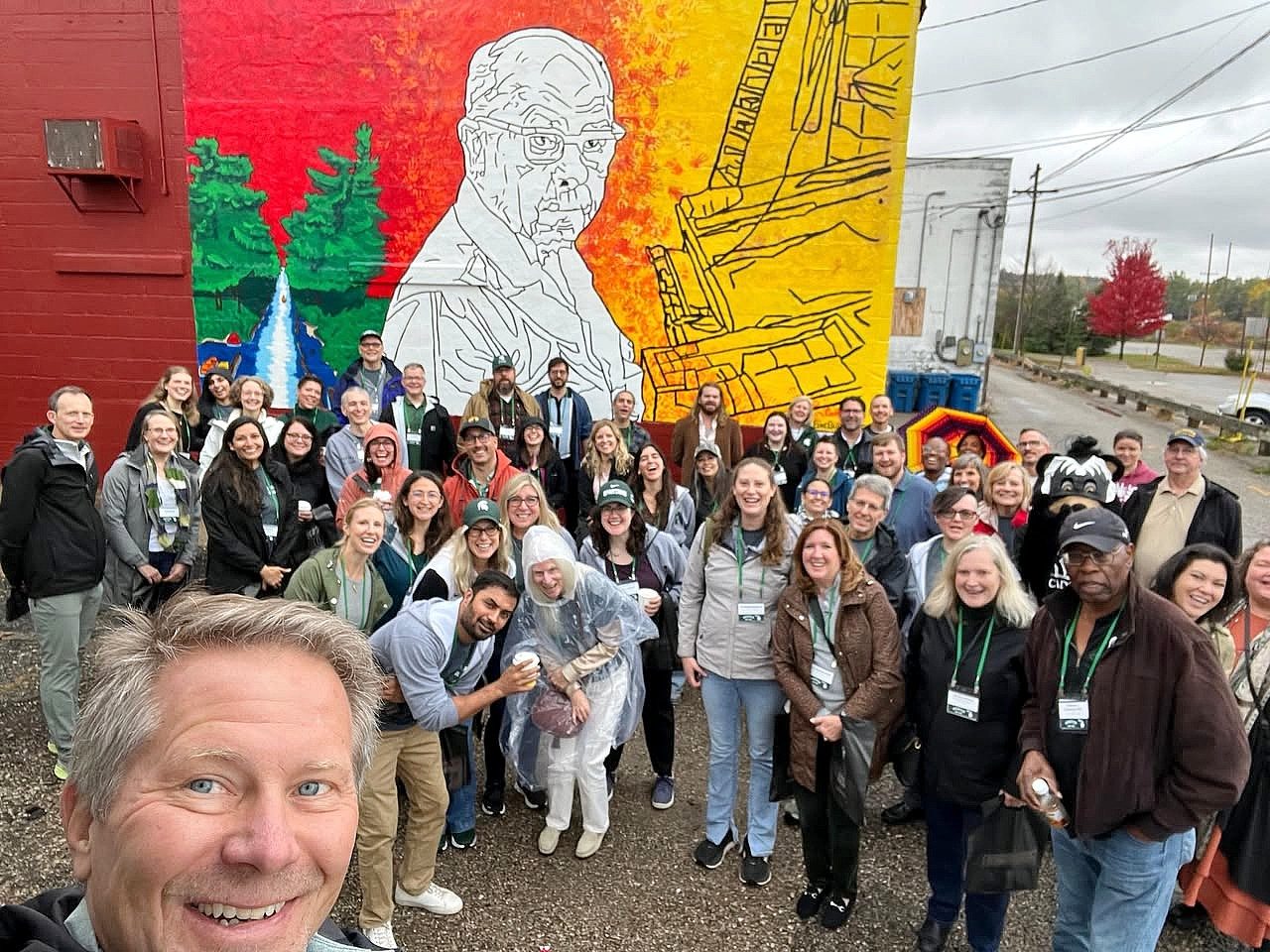
Together, these efforts demonstrate that making the arts accessible means more than opening gallery or theatre doors. It means creating opportunities for people to encounter different perspectives, tell their own stories, build relationships, and participate in the cultural life of their communities.
Read More:
- Suban Nur Cooley Named Lansing’s Next Poet Laureate
- Michigan Pride Juried Exhibition Celebrates LGBTQ+ Artists From Across Michigan
- Largest Latinx Film Festival in Michigan Returns to MSU
- Summer Circle Theatre to Offer Free Outdoor Performances at MSU
- College of Arts and Letters Alum Helps Bring Vibrant Public Art to Northern Michigan Community
Arts and Humanities in Service to Michigan
Taken individually, each initiative represents a particular program, partnership, research project, performance, exhibition, or educational experience. Together, they tell a much larger story — one that demonstrates why Michigan set aside a day to recognize the role of arts, culture, and the humanities.
Across Michigan, the College of Arts and Letters is helping preserve cultural heritage while encouraging new forms of artistic expression. It is strengthening education by supporting teachers and expanding opportunities for learners. It is helping families access information in their own languages while helping communities tell their stories through art. It is creating spaces where people can encounter different perspectives, ask difficult questions, recognize shared experiences, and better understand one another. And it is preparing students to carry that work forward as artists, writers, educators, designers, translators, researchers, advocates, entrepreneurs, and community leaders.

The impact can be seen in a teacher returning to a classroom with new ideas. In a family receiving information in a language they understand. In a poet bringing people together through words. And in students learning that the knowledge they develop at Michigan State can have meaning far beyond a grade or a degree.
The examples highlighted here represent only a small portion of the College of Arts and Letters’ work across the state. The college’s commitment to the people and communities of Michigan can be seen through a wide range of partnerships, outreach initiatives, and community-engaged research projects. Among them is the work of Elena Ruíz, Professor in MSU’s Department of Philosophy and founder and Director of the Research Institute for Structural Change. For nearly four years, Ruíz and two Detroit organizations — Women Healing Eternally and Transforming (WHEAT) and Sara’s House/Place Detroit — have worked together to expand services for survivors of domestic violence, sexual assault, and human trafficking in Detroit, securing nearly $900,000 in funding, launching new programs, and strengthening community-led support networks.
The college’s outreach also extends into Michigan correctional facilities, where students in the Writing Inside course taught by Kirk Astle, Assistant Professor in the Department of Writing, Rhetoric, and Cultures, meet with incarcerated college students through the Write On! program at Parnall Correctional Facility in Jackson, Michigan, to collaborate on projects ranging from poetry and annotated bibliographies to the complexities of the comma. The program aims to humanize the experience and to change the narrative about those incarcerated.

Together, these efforts reflect a philosophy that places trust, reciprocity, and sustained engagement at the center of community partnerships. For a public, land-grant university, that connection matters.
The arts and humanities at Michigan State University don’t stop at the edge of campus. They move outward — into classrooms, libraries, museums, galleries, neighborhoods, organizations, and communities — enriching Michigan today while helping shape a more creative, connected, and resilient future for the state.
Read More:
- MSU Institute Director Honored for Community-Led Partnership Supporting Survivors of Gender-Based Violence
- Behind Prison Walls: MSU and Incarcerated Students Learn From Each Other Through Writing
By Kim Popiolek