After exploring several majors at Michigan State University, Aditi Gonuguntala found more than a degree program in Experience Architecture (XA). She found a new way of thinking — one centered on designing experiences that are accessible, inclusive, and built around people’s needs.

Now a senior majoring in Experience Architecture with a minor in Graphic Design, Aditi said discovering XA changed the course of her college experience. The program has brought together her interests in design, technology, and people while reshaping the way she thinks about accessibility and human-centered design.
“That was probably the best decision I’ve ever made,” Aditi said of choosing the XA major. “XA changed how I see people, technology, and my responsibility as a designer. It taught me that design is never neutral. Every choice — what I included, what is excluded, what is easy to access, and what is difficult — shapes human experience.”
Aditi said the program’s flexibility and interdisciplinary nature allow her to explore a wide range of creative interests while focusing on one central goal: designing meaningful experiences for people.
“XA changed how I see people, technology, and my responsibility as a designer. It taught me that design is never neutral. Every choice… shapes human experience.”
“I love the XA program because it’s fluid with anything that you want to do,” she said. “It’s basically creating the experience for the user. It could be a physical space. It could be a digital space. It could be basically anything.”
Learning Accessibility Through Experience Architecture
Experience Architecture has given Aditi a framework for putting her long-standing interest in communication and human connection into practice.
“XA’s sole purpose is to make everything accessible and user-friendly. Digital accessibility is very prominent,” she said. “That stuck with me mainly because I have ADHD, and it’s extremely difficult for me to navigate a lot of interfaces. It never crossed my mind until I learned about it in class.”
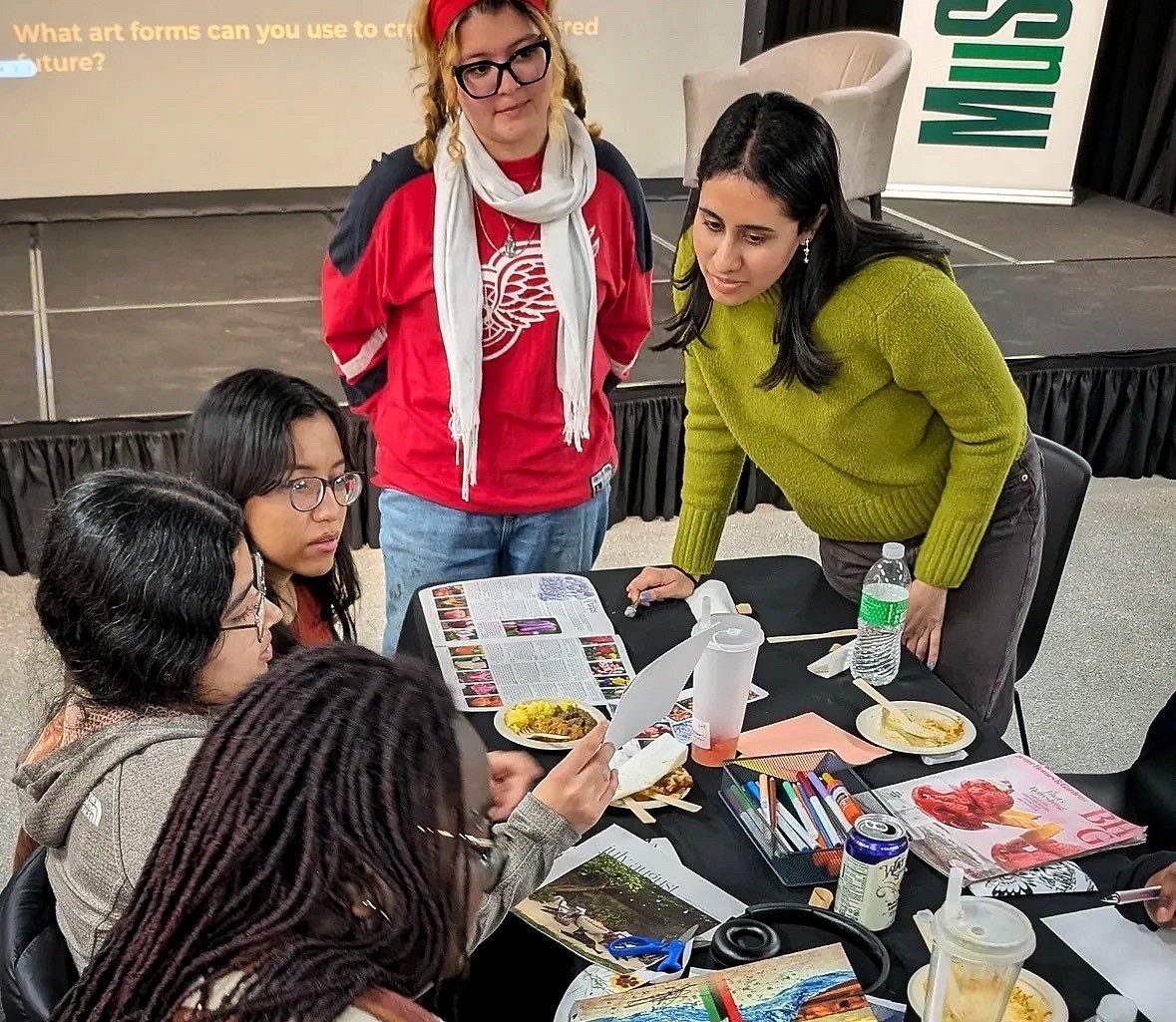
Before joining the XA Program, Aditi said she spent years struggling with digital spaces without understanding why. Poorly formatted PDFs overwhelmed her, confusing website navigation made her lose focus, low contrast text made reading exhausting, and videos without captions left information incomplete.
“As someone who is neurodivergent, these barriers were not small inconveniences. They made access genuinely harder. I assumed that was simply how technology worked,” Aditi said. “The most transformative part of my XA experience was discovering digital accessibility. In XA, I learned that accessibility is not an extra feature. It is a foundational design.”
As she learned more about accessible design, Aditi began noticing barriers in both digital and physical environments.
“Once you start noticing the misalignments — the inconsistent heading structure, the unreadable color contrast, the PDFs with no logical reading order — you start seeing them everywhere,” Aditi said. “And then you have to ask: why isn’t this already standard practice? Why does inclusion still require a special effort? Inaccessible design isn’t just poor craft. It’s withholding information. Whether someone’s disability is neurological or physical, the effect is the same: they’re shut out.”
“Inaccessible design isn’t just poor craft. It’s withholding information. Whether someone’s disability is neurological or physical, the effect is the same: they’re shut out.”
Her growing interest in accessibility led her to the Inclusive Excellence and Impact (IEI) Office, where she works as a student communications and outreach assistant, contributing to the office’s communications through articles for MSUToday and inclusive multimedia content.
Drawing on concepts she learned in XA, Aditi has written about accessibility for campus audiences and beyond. In one article, “The Architecture of Accommodations: Building a Century Long Commitment to Accessibility,” she explored how Michigan State University has approached accessibility as a foundational element of campus design rather than an afterthought. The article was published in The Able(L)ist, a platform dedicated to challenging ableist narratives and advancing disability coverage in higher education.

Writing the article gave Aditi an opportunity to connect principles she studied in XA with real-world examples of inclusive design. It also reinforced something she has come to believe throughout her time at MSU: thoughtful design can do more than solve problems. It can reduce confusion, create moments of clarity, and help people feel more connected. Whether designing digital interfaces, visual communication, or physical spaces, Aditi strives to create experiences that feel intuitive, welcoming, and human.
A speaker of five languages — English, Telugu, Tamil, Kannada, and beginner-level French — Aditi has long been fascinated by the ways people communicate and experience the world.
“It is how an experience is communicated that matters, and that comes right back to inclusion and accessibility. I love creating work that everyone can experience in their own way.”
“Being able to communicate with people who speak different languages has given me a window into their cultures and experiences,” she said. “It really instilled in me the idea that communication is at the heart of art and design because it’s how people’s experiences get shared. What has stuck with me is that language itself is never the real barrier. It is how an experience is communicated that matters, and that comes right back to inclusion and accessibility. I love creating work that everyone can experience in their own way.”
The lessons she has learned through both her coursework and professional experience continue to shape her everyday life.
“Even the way I arrange my apartment, I make sure it’s more accessible for everyone,” she said. “XA really changed my perspective on human-centered design.”
Finding Community Through Student Organizations
Beyond the classroom and her work with IEI, Aditi has immersed herself in student organizations, particularly during her junior and senior years. She serves as Outreach Director for AIGA MSU, Art Director and Editorial Graphic Designer for VIM Magazine, is a marketing member for SpartaHack, and is involved with Designathon.

She initially joined student organizations to meet people but soon discovered they also provided valuable professional experience. For instance, through her work with AIGA, she developed confidence in outreach and communication.
“I wasn’t good at sending emails — whether it was making requests, asking questions, or reaching out cold to people I didn’t know,” she said. “Being in the Outreach Director position helped me realize that email outreach and networking go so much deeper than I initially thought. It’s not just sending a message. It’s about how you communicate, how you build a relationship, and how you represent yourself and your organization.”
As Outreach Director for AIGA MSU, she connected with professors, industry professionals, and guest speakers, building communication and networking skills that once felt intimidating.


SpartaHack introduced her to event planning and marketing, while VIM Magazine offered an immersive look into editorial design.
“It was definitely a hustle and was very eye-opening,” she said of coordinating models, photographers, stylists, and design assets for VIM. “It was definitely a peek into the real world.”
Mentorship and Growth in the Classroom
Faculty mentorship also has played an important role in Aditi’s college experience.
Casey McArdle, Associate Professor in the Department of Writing, Rhetoric, and Cultures and Director of the Experience Architecture Program, helped shape Aditi’s professional goals and was the one who introduced her to the XA program.
“Professor McArdle helped me see all the possibilities the XA program could open up across different career paths,” Aditi said. “He has been an incredibly supportive mentor, always the first to offer help or resources whenever I needed them. He supported me through some difficult times in my academic journey, and I know my peers would say the same about him. Having professors like him makes the student experience at MSU so much richer and more supported.”

Aditi credits Ann Burke, Assistant Professor in the Department of Writing, Rhetoric, and Cultures and the Experience Architecture program, with helping her grow both creatively and personally.
Burke taught Aditi during her first semester in the program and later in XA 310. She appreciated the project-driven structure of Burke’s courses, which encouraged students to work toward a central outcome throughout the semester while allowing room for creativity.
Burke also supported Aditi’s desire to approach assignments from a design-forward perspective while still meeting course requirements. That flexibility proved especially meaningful as she balanced coursework while navigating her personal learning style.
“Just coping with class was very difficult for me in general,” Aditi said. “She’s always been such a great professor and always helped me through any decision that I made. She encouraged me to go a little bit off track of assignments, just to help me figure out what I’m really accomplishing in that class.”
Looking Ahead
As she prepares to graduate in August 2026, Aditi’s proudest accomplishment is what XA made possible — whether writing articles, leading marketing for hackathons, remediating documents at the MSU Main Library, or art directing for VIM Magazine. XA gave her the fluidity to wear multiple hats, move across career paths, and show that basically anything was possible.
After graduation, Aditi plans to pursue graduate school and creative roles, with the long-term goal of becoming a creative director.


She hopes to create work that bridges technology, digital media, and human interaction through thoughtful, accessible design. As artificial intelligence and emerging technologies continue to reshape creative fields, she believes designers have an important role in ensuring those tools remain grounded in human experience, empathy, and connection. She also sees Experience Architecture as a foundation that will open doors across multiple industries and disciplines.
“I could basically do anything I want,” she said.
Her advice for students interested in design, storytelling, or inclusive digital experiences is straightforward: get involved.
“You need to get out of the classroom and join organizations and clubs,” she said. “It fosters confidence and improves your people skills.”
By Austin Curtis and Kim Popiolek


