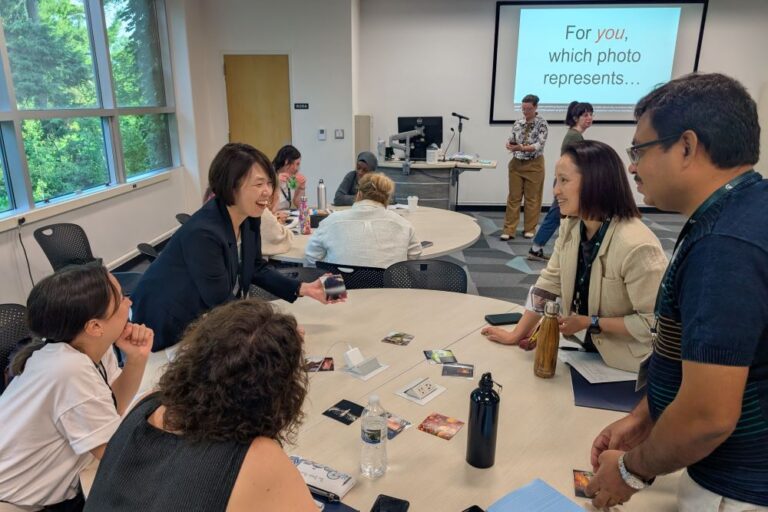
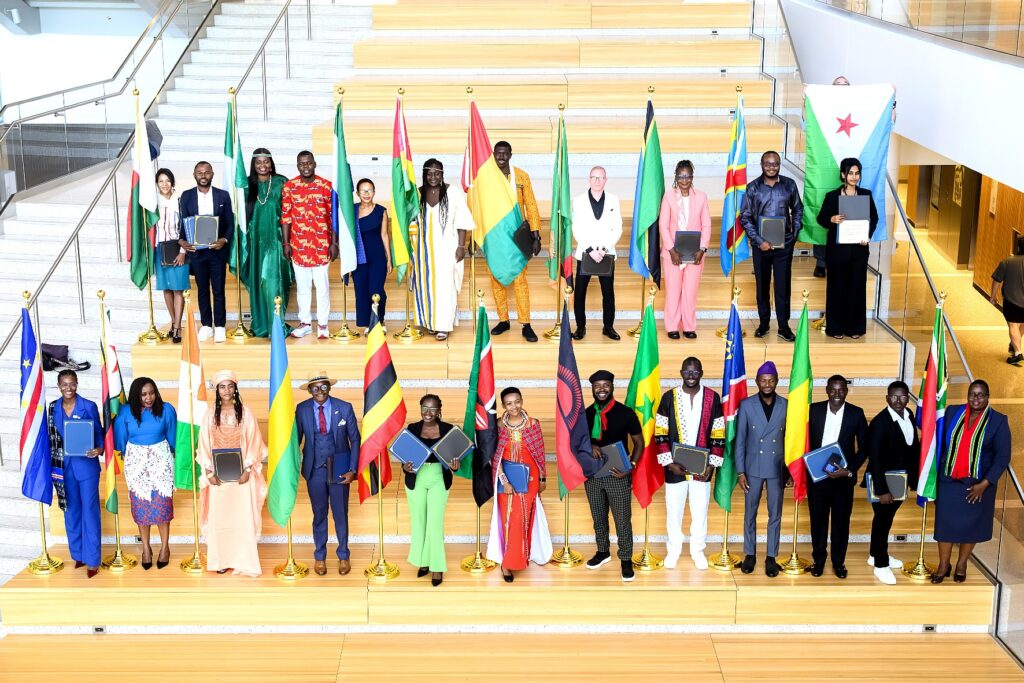
For the fourth year, Michigan State University was among 25 educational institutions across the country to provide a leadership institute for the Mandela Washington Fellowship for Young African Leaders. This year, the university welcomed 23 Fellows from 19 African countries for a six-week program in civic engagement that ran from June 19-July 17, 2025.
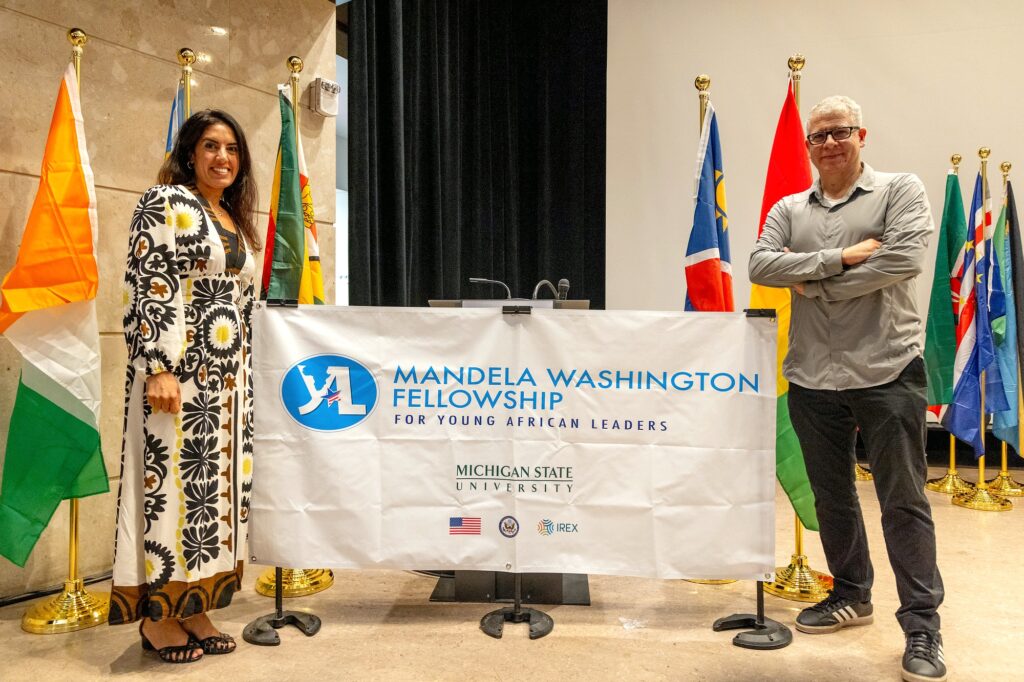
The co-academic directors of the Mandela Washington Fellowship Program at Michigan State University are Salah Hassan and Anjam Chaudhary. Hassan is a Professor in the Department of English, Director of Global Studies in the Arts and Humanities, and founding core faculty member in the Muslim Studies Program. Chaudhary is the Program Director of Global Inclusion in International Studies and Programs.
Sponsored by the U.S. Department of State and hosted by MSU’s Alliance for African Partnership and the Global Studies in the Arts and Humanities Program in the College of Arts & Letters, MSU’s Leadership Institute in Civic Engagement (for Mandela Washington Fellows) focuses on effective advocacy through an integrated and interactive program built around academic and leadership sessions, site visits and networking activities, coaching and cultural exchanges.
“For the first time, we had Fellows from Togo, Djibouti, and Gabon, which further enriched what has always been a diverse representation of Africa,” Chaudhary said.
The Fellows ranged in age and vocation with all being accomplished innovators and leaders in their communities and countries. From financial managers to lawyers, physicians and social workers, to teachers, graduate students, and journalists, they represented a broad spectrum of interests, skillsets, and talents.
“These Mandela Washington Fellows are outstanding leaders who, despite their youth, embody the best models of civically minded professionals from all sectors of society,” Hassan said. “More now than ever, we must look to the growing number of young leaders in Africa whose engagements and confidence will lead us into a better future.”
“More now than ever, we must look to the growing number of young leaders in Africa whose engagements and confidence will lead us into a better future.”
Dr. Salah Hassan
One of the closing events for the Mandela Washington Fellows was presenting their leadership initiatives in a 5-minute Ignite format. Fellows shared powerful stories, bold ideas, and visions for changes rooted in their focus projects and leadership journeys. To view the IGNITE talks delivered by each Mandela Washington Fellow, visit the College of Arts & Letters YouTube channel.
“The 2025 Mandela Washington Fellows embodied and shared the spirit of Ubuntu within their group and with our MSU community. To them: We truly are because you are,” Chaudhary said.

(Photo by Ryan Frederick)
The word ubuntu is an ancient African word meaning humanity to others, which is the underlying theme of a leadership institute built upon civic engagement.
Another component of the program was a collective art project, which was led by Zahrah Resh, a local visual artist. Resh facilitated a series of activities and contributed collectively to artworks aimed at fostering self-awareness, social connections, and collaborations.
“I wanted to start their first art activity by letting them ‘loose’ to create masks in whatever fashion they wish to do with the materials provided,” Resh said. “It was an activity of self-expression, something fun, not bound by strict dos and don’ts, and to think outside the box as much as possible.”

Olufunmi Olaosun, a Fellow from Nigeria and communications professional, described the entirety of the Fellowship experience as an opportunity to gain clarity.
“From the leadership training sessions to the cultural activities to the community service — it was a well-rounded experience,” she said. “The lessons I learned were not just from the classroom but also from the people. Lessons in humility, language, resilience, and the power of community. I was able to get a better understanding of myself and my strengths, which has given me a sense of direction that will make a difference in my leadership journey.”
To learn more about the Mandela Washington Fellowship, visit mandelawashingtonfellowship.org.
By Beth Brauer and originally published by International Studies & Programs